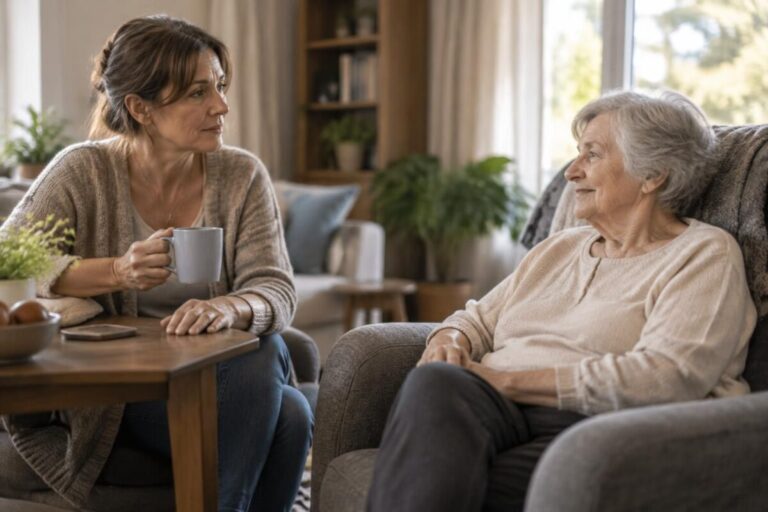
Seniors: Supporting a Divorce That Has Become Inevitable
Hi, it’s Manon. To support someone through a divorce that has become inevitable after 60, listen without judging, help organize the necessary steps, and encourage them to seek appropriate support. A late-life divorce can shake up a person’s sense of stability, but practical support can help them get through this stage and prepare for a fresh start.
What to do right now
- Listen without trying to make decisions for them.
- Offer practical help: go with them to an appointment or sort through important documents.
- Encourage them to consult a lawyer or notary about housing, assets, and retirement.
- Help them maintain social connections through simple, regular outings.
- Stay alert to signs of distress and suggest psychological support if needed.
After a long life together, separation often affects a person’s identity, family, finances, and health all at once. The most helpful thing is to let them set their own pace while helping them avoid facing the practical steps alone. To better understand the issues involved, you can read this guide to divorce in retirement and these tips on managing money as a couple after retirement.
Late-life divorce: offer support without taking control
A loved one may go from anger to relief, then start doubting their decision. These reactions don’t follow a set order. A simple phrase like “I’m here. Tell me what would help you today” often opens the conversation better than offering immediate advice.
Avoid speaking badly about the other spouse, even if the situation outrages you. Adult children and grandchildren may be affected too: calm, age-appropriate words can reassure them without drawing them into the conflict.
Two situations, two kinds of support
If the person feels overwhelmed, help them find a professional and maintain their basic routines. If they feel ready to take action, help them sort their documents and prepare their questions, without speaking for them.
Sometimes an anecdote is enough to highlight this need: after a separation, a 68-year-old woman started attending a painting class again, which she had given up years earlier. This weekly commitment gave her a sense of stability of her own, separate from her former life as part of a couple.
Three steps to support personal recovery
- Step 1 — Listen and help them feel safe. Ask what feels most urgent: talking, finding an appointment, or sorting out a practical issue. If sleep problems, severe anxiety, or thoughts of self-harm arise, suggest contacting a doctor promptly.
- Step 2 — Review their rights and budget. A legal professional can explain the implications of the marital property regime, the division of assets, and retirement benefits. Family mediation can help ease communication if both people agree; it does not replace legal advice.
- Step 3 — Find a personal sense of stability again. Encourage an enjoyable activity, regular contact with others, and outings that suit their interests. The goal isn’t to “move on” quickly, but to gradually regain independence.
As a simple saying goes: “It’s easier to move forward when you don’t have to do it alone.” This support can be discreet: suggest going for a walk, help make an appointment, or simply be available after a difficult day.
Emotional, family, and financial stability
The end of a marriage that has lasted several decades can feel like losing part of one’s identity. Mutual friends, family celebrations, and retirement plans may all need to be reorganized. Maintaining chosen relationships and forming new habits can help someone navigate this change without becoming isolated.
Housing and income also require special attention. A separation can change someone’s standard of living, especially when incomes or retirement benefits differ. Seniors’ rights and the financial implications are worth reviewing with professionals, rather than relying on general advice.
| Need | Supportive action | Possible contact |
|---|---|---|
| Emotions and well-being | Listen, stay in touch, suggest an appointment | Doctor or psychologist |
| Assets and retirement | Gather documents and draw up a budget | Lawyer, notary, or retirement advisor |
| Family relationships | Avoid taking sides and clarify boundaries | Family mediator, if both people wish |
| Isolation | Plan a regular activity and visits | Association, club, or support group |
A separation doesn’t erase the years they shared or their relationships with their children. It means reshaping routines, sometimes slowly, with choices that respect everyone’s needs.
A fresh start without a set timeline
There’s no need to push a loved one to meet someone or “get back out there.” The first step might be rediscovering an activity they enjoy, rearranging their space, or reconnecting with an old friend. Personal recovery happens at their own pace, and every small decision they take back into their own hands matters.
If the person wants to consider a new relationship, let them decide what works for them: living together, keeping separate homes, or choosing a relationship without cohabitation. Their well-being and ability to make their own choices remain the priority.
Helpful answers about divorce among seniors
How can I help a senior parent who is getting divorced?
Listen without judging, ask what practical help would be useful, and encourage them to consult the appropriate professionals for legal, financial, or psychological matters.
Should I encourage family mediation?
It can facilitate dialogue if both people are willing. It does not replace advice from a lawyer or notary about the legal and financial implications.
What signs should raise concern after a separation?
Significant isolation, persistent sleep problems, severe anxiety, or thoughts of self-harm are reasons to promptly suggest talking to a doctor or psychologist.
How should I talk to grandchildren about the divorce?
Give a simple explanation, without intimate details or blame. Reassure them that their grandparents love them and explain that the separation is not their fault.
Thanks for reading! If this topic resonates with you, I’d love it if you left me a comment at the bottom of the article. — Manon