Seniors: at-home activities with the little ones without losing your patience
Hi, it’s Manon. To enjoy an activity at home with the little ones without losing your patience, choose a simple game, get the supplies ready before they arrive, and keep the session short. The secret: focus on having fun together, not on getting a perfect result. With a few easy rules, quality time together soon takes precedence over the mess.
Things to do right now
- Choose an activity that suits the children’s ages and energy levels.
- Get all the supplies ready before you start.
- Set a short time limit, around 15 to 30 minutes depending on the situation.
- Offer two simple choices instead of imposing an activity.
- Plan a break or a backup activity in case they lose interest.
To find more ideas for activities for different generations, you can also check out these tips on organizing activities across generations and these ideas for sharing activities with your grandchildren without feeling overwhelmed.
Easy activities to enjoy at home with your grandchildren
Arts and crafts with your grandchildren work well when the project is very simple: decorate a card, stick on pre-cut shapes, or make a little collage. Lay down a washable tablecloth and limit the supplies to a few items. The fewer choices there are on the table, the easier it is to keep things calm.
Cooking as a family can also be a lovely way to spend time together. The children can mix batter, wash fruit, or decorate cookies, while any tasks involving the oven or knives are left to the adult.
For a quieter activity, try board games with short rules, a puzzle with large pieces, or reading aloud. A story can then become a game: everyone chooses a character, imagines a different ending, or draws their favorite scene.
Choose an activity based on the children’s energy and ages
Creative activities often appeal to children who like making things and using their imagination. For little ones who need to move around, turn tidying up into a game or set up an easy course with cushions on the floor, making sure there are no dangerous obstacles.
If it’s a quiet day, choose a story, drawing, or quiet games to play at home. If the children have lots of energy, take a short movement break before starting again rather than insisting on a seated activity.
One afternoon, a grandmother had planned a detailed craft project with several steps. The little ones preferred decorating a few cards with stickers; simplifying the project helped them enjoy time together without rushing.
Stay patient when the activity doesn’t go as planned
Grandparents’ patience doesn’t depend on having a perfect day. You can protect it by lowering your expectations: an activity can last ten minutes, change shape, or end before it’s finished. “Having fun together matters more than the result.”
When frustration starts to build, slow down and name what’s happening without scolding: “Let’s take a little break, then decide what to do next.” This approach supports emotional regulation for children and adults alike. If you feel yourself getting upset, put the supplies away for a few minutes and suggest having a glass of water.
A three-step method to stay on track
- Step 1: Prepare one main activity and a backup option, with the supplies already set out.
- Step 2: Explain one instruction at a time, then let the children try things their own way.
- Step 3: Give a few minutes’ notice before it’s time to finish, and tidy up together without trying to put everything back in order right away.
A well-chosen activity doesn’t need to fill the whole afternoon. Having an easy way to stop makes the moment more relaxing for everyone.
Ideas for different amounts of free time
| Time available | At-home idea | How to keep things calm |
|---|---|---|
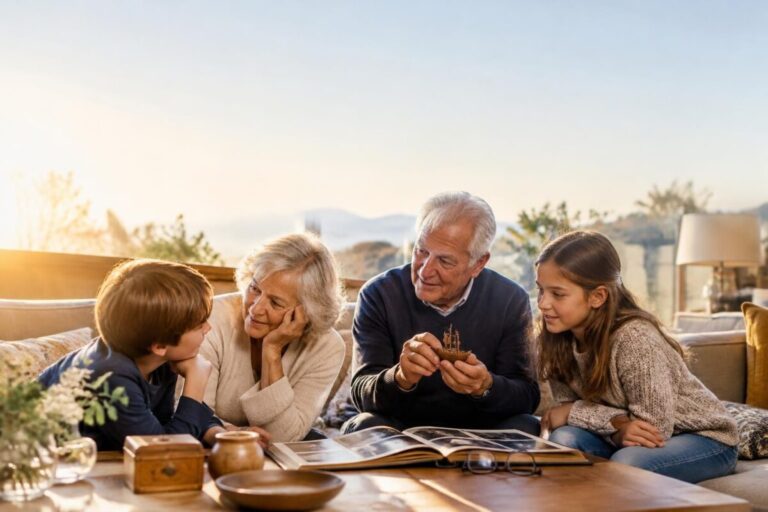
| A few minutes | Look through a photo album and share a memory | Ask one question at a time |
| About 15 minutes | Read a story or draw a picture together | Get only a few supplies ready |
| About 30 minutes | Decorate cookies or make a collage | Give everyone a simple task |
| Depending on the day’s energy | Do a puzzle or play a board game | Stop before anyone gets tired |
The best guide is the group’s mood: if the children lose interest, switch activities or end the session. There’s nothing to prove; it’s simply a moment to enjoy together.
Practical questions about sharing an activity with the little ones
How much time should I plan for an activity with my grandchildren?
Start with a short activity, around 15 to 30 minutes depending on the children’s ages and energy levels. You can keep going if everyone is enjoying themselves.
What should I do if a child refuses to join in?
Offer two simple options, such as listening to a story or drawing. Don’t insist: the child can join in later.
Which activities should I choose if I want to avoid a mess?
Reading, board games with simple rules, and puzzles are all good options. Get out only the supplies you need and set up on a surface that’s easy to clean.
How can I manage my own impatience?
Take a break as soon as you feel tension building, breathe, and simplify the instructions. It’s better to calmly stop an activity than to push on at all costs.
Thanks for reading! If this topic speaks to you, feel free to leave me a comment at the bottom of the article. — Manon