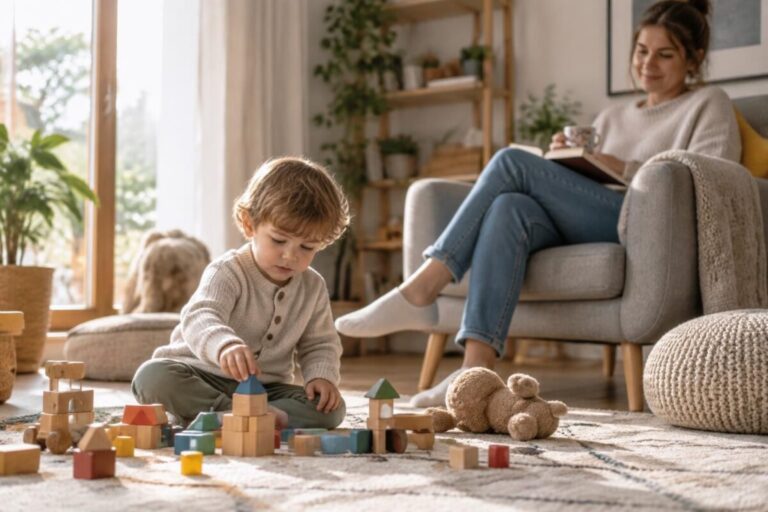
Couple life: Does your child benefit from your differences?
Hello, it’s Manon. Yes, a child can benefit from their parents’ differences if they are experienced respectfully and accompanied by shared guidelines. In a couple, two ways of seeing things can broaden a child’s view of the world. The key is not to put them in the middle of parenting disagreements.
Things to do right now
- Identify one difference that enriches your daily life and another that creates tension.
- Talk about it together, away from your child.
- Agree on a few shared rules for the most important issues.
- Explain your choices in age-appropriate language, without putting the other parent down.
- Each of you should keep some moments and activities that feel like you.
Parents don’t need to be identical to provide a reassuring framework. To think about how to explain your decisions, you can read these tips on parental communication and on disagreements expressed in front of a child.
How parental differences can enrich a child
One parent may like to plan ahead, while the other prefers to improvise. One might suggest a sports activity, while the other would rather read or make things. If each respects the other’s place, the child discovers several ways to think, unwind, and solve a problem. This diversity can support their development and curiosity.
Differences become a resource when they don’t turn into a competition. “We can disagree and still be a team.” This idea helps a child understand that disagreement does not erase affection or respect.
Parents complementing each other, without trying to share everything
Parents complementing each other does not mean that each has to make up for the other’s shortcomings or play a fixed role. It develops through everyday gestures: one parent helps plan an outing, while the other makes transitions easier. In this way, a child can benefit from different strengths without one parent being presented as the “good” one and the other as the “bad” one.
An anecdote illustrates this well: in one family, one parent packed everything the night before, while the other made up games during the journey. Their child eventually came to appreciate both habits. They knew the departure was organized, but that the journey could also hold surprises.
When differences lead to parenting disagreements
Difficulties arise mainly when rules change without explanation, or when one parent contradicts the other to win the child’s support. Differences over bedtime, screens, or boundaries are common. But repeated conflicts in front of a child can make them feel responsible or feel they have to choose sides.
You don’t need to use the same approach for every little detail. It’s better to distinguish personal habits from issues related to safety, respect, and family responsibilities. This basic agreement supports family balance without erasing anyone’s personality.
| Situation | What may help | Guideline for the child |
|---|---|---|
| Different routines | Explain each person’s habits | There are several ways to do things |
| Disagreement about an important rule | Discuss it between adults, then announce a joint decision | The parents provide a reliable framework |
| Tension in front of the child | Take a break and resume the discussion later | It’s not the child’s job to resolve the conflict |
| A parent’s need for independence | Make space for personal activities that work with family life | Everyone can keep their own interests and relationships |
If it’s a day-to-day preference, such as the order of activities, you can often let each person do things their own way. If it concerns safety or an essential boundary, agree on a shared guideline before discussing it with your child.
A three-step approach to moving forward together
Step 1: State the difference precisely, without judgment. Replace “you’re too strict” with “we set different limits on screen time.”
Step 2: Listen to what the rule means to each of you. A habit may stem from a worry, a need for independence, or a personal experience. Communication in your relationship helps you understand each other before looking for a compromise.
Step 3: Choose a rule you can try for a few weeks, then review how it’s working. An agreement can evolve as your child grows and your family’s needs change; it doesn’t need to be set in stone.
Protecting your parenting relationship and your child’s well-being
A shared framework does not require you to speak with one voice about every detail. Parents can acknowledge their disagreement, then calmly explain what they have decided together. The child then understands that differences are allowed, but that adults remain responsible for decisions.
For your child’s well-being, avoid asking them to decide who is right, pass on reproaches, or keep a secret between their parents. If discussions often turn into confrontations, a couples or parenting professional can help restore calmer communication.
Do parents always have to give the same answer?
No. What matters most is agreeing on important rules, especially those concerning safety and respect. Other habits can differ as long as they are explained clearly.
Can a child be unsettled by their parents’ disagreements?
An occasional, respectful disagreement is not necessarily a cause for concern. Repeated arguments, humiliation, or being asked to choose sides can affect a child, however.
How should you talk about a disagreement in front of your child?
Keep it simple and calm: you can say that you see things differently and will talk about it later, as adults. The child does not have to settle the discussion.
When should you seek help?
If tensions keep recurring, make it difficult to reach decisions, or affect family life, professional support can help reopen communication and establish shared guidelines.
Thanks for reading! If this topic resonates with you, feel free to leave me a comment at the bottom of the article. — Manon